


How a Hidden Home‑Economics Leak Can Become the Spigot That Funds Your Future
Most people think they need a raise, a side hustle, or a miracle to find an extra $100 a month to invest.
But for many households — especially in Michigan — the money is already there. It’s just being burned quietly, load after load, in the most boring appliance in the house:
The electric clothes dryer.
Yes, really.
The Biggest Hidden Cost in American Homes
Electric dryers are the perfect economic blind spot:
They run quietly.
They run in short bursts.
They don’t look powerful.
They don’t feel expensive.
They don’t show up as a line item on your bill.
But they are one of the most energy‑hungry machines in the modern home, and in states like Michigan — where electricity is expensive and natural gas is dirt cheap
— the cost difference is staggering.
Electric dryer: ~$90–$120/month
Gas dryer: ~$10/month
That’s not a typo.
Why the Difference Is So Huge
Electric dryers use a giant heating coil that pulls 4,000–6,000 watts. Gas dryers use a tiny amount of electricity and a cheap natural‑gas flame.
In Michigan, where gas is among the cheapest in the country, the economics tilt even harder:
Electricity: expensive
Natural gas: extremely cheap
Laundry volume: high for families
Dryer cycles: 2–4 loads/day in many homes
And here’s where the story gets real.
If You’re a Young Family, the Economics Get Even More Extreme
If you’ve got young kids at home, you’re not doing 2–3 loads a day — you’re doing 3–4. And if one parent stepped away from the workforce for a few years, money is often tight.
That combination — high laundry volume + reduced household income — makes the economics of switching from electric to gas astonishing.
For many families, the dryer becomes a silent $1,000‑a‑year drain at the exact moment in life when every dollar matters most.
This is why so many parents feel like they “can’t get ahead.” They’re not doing anything wrong — they’re just unknowingly paying a premium for heat.
The Economics Lesson Hiding in Your Laundry Room
People often say:
“I’d invest more if I had extra money.”
But the truth is:
Most households already have a $100/month investing engine — they just haven’t turned the valve.
Switching from electric to gas drying is one of the rare home decisions that:
Cuts costs immediately
Requires no lifestyle change
Pays for itself in 1–2 months
Future‑proofs you against rising electricity demand
And that last point matters.
Future‑Proofing: Electricity Demand Is About to Explode
Data centers, AI clusters, EV charging, and electrification of heating are all pushing electricity demand up faster than utilities can build capacity.
Electricity prices will rise. Natural gas prices… not nearly as much.
Gas dryers become more cost‑effective over time, not less.
This is the rare case where the “old tech” is actually the smarter long‑term play.
The Spigot to Your Investing Machine
If you’re trying to build wealth, the hardest part is often just finding the first $100/month to invest.
But for many families, that money is already there — trapped in an appliance that no one ever questions.
Switching to gas drying turns:
$70–$150/month in wasted electricity into
$70–$150/month in automatic investing fuel
That’s:
$840–$1,800 per year
$8,400–$18,000 per decade
$100,000+ over a working lifetime (with compounding)
All from one decision.
Your Next Step Starts Here
If you’re looking for the easiest, highest‑ROI way to free up $100 a month to invest, start with the dryer.
*Please note that we are not licensed plumbers or electricians. Always consult a qualified professional regarding the advisability, safety, and cost of any home modification. This example is for informational purposes only, illustrating how a small change can create long‑term improvements in your cash flow and free up funds to invest consistently for your future.*
See below for some switch‑assessment tips.
Still Need Convincing? Here’s What Gas Drying Actually Feels Like
Gas drying isn’t just cheaper — it’s better:
No smell. The combustion chamber is sealed; only clean heated air enters the drum.
Faster drying. Gas heat is instant; electric coils take 5–10 minutes to warm up.
Gentler on clothes. Lower sustained heat = less fabric damage.
More consistent. Gas maintains steady temperature instead of cycling on/off.
Most people who switch say the same thing:
“Why didn’t I do this years ago?”
Switch Assessment Tips (What to Check Before You Buy)
1. Are you already gas‑plumbed nearby?
If you have a gas line for:
a water heater
a furnace
a fireplace
a stove
…and it’s near the laundry area, you’re in luck. You’re 80% of the way there.
2. You only need a plumber once
A licensed plumber will:
install a dedicated gas shutoff valve
run a short flex line
connect the dryer safely
This is a one‑time job, usually $100–$200.
After that, you’re done forever.
3. Every major brand makes gas versions
Whirlpool, Maytag, LG, Samsung, GE — all of them.
4. There are tons of used gas dryers on Facebook Marketplace
Because:
people move
people remodel
people switch to stackables
people don’t know the value
You can often find a perfectly good gas dryer for $100–$250.
Your payback period? Weeks. Not months.
And One More Thing…
We often have power outages in Michigan.
Guess what doesn’t go out during a power outage?
Your gas dryer.
Guess what doesn’t need a special 220‑volt generator hookup to run?
Your gas dryer.
The drum motor runs on a simple 120‑volt outlet — the same as a lamp. The heat comes from gas.
So during an outage, your new gas dryer keeps working while electric dryers sit dead.
That’s not just savings — that’s resilience.
The Lesson
Sometimes the biggest financial wins aren’t about earning more — they’re about stopping the silent leaks that drain your ability to invest.
And sometimes the spigot to your investing machine isn’t on Wall Street.
It’s in your laundry room.
Ready to Take Action?
If this opened your eyes to a hidden savings lever in your own home, chances are it will help someone you care about too. Share this post with a friend who’s trying to get ahead, give themselves some breathing room in the budget, or find their first $100 a month to invest. And if you want help turning these savings into a long‑term investing plan that compounds for decades, reach out through our Contact Us page — we’re here to help you build the systems that build your future.
---------------------------------------------
Ok, What could the extra $100/mo you save switching dryers do for your Retirement?
How about a potential extra $80,000 over 20 years?
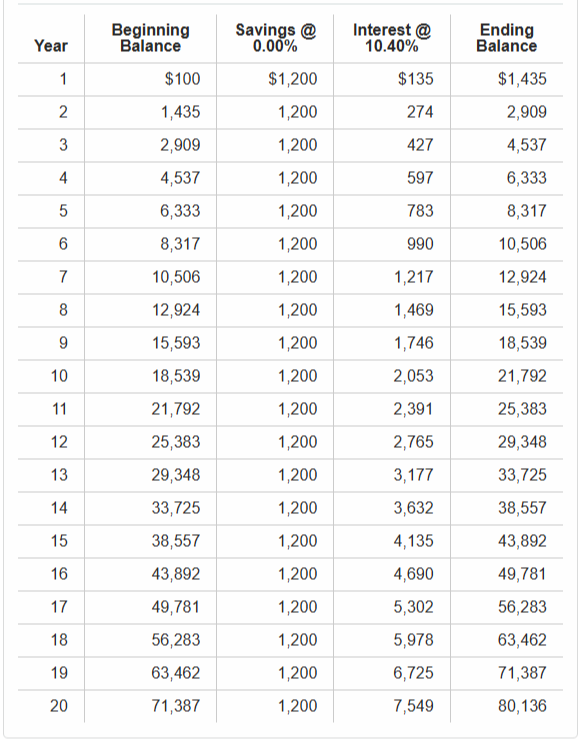
This assumption uses the large cap stock annual growth average (10.4%) of the previous 20 yr period. (It's important to note that past performance is not a guarantee of future return)
You can run your own projections on our financial tools section right here!Maendel Wealth Resource Center: Compound Interest Calculator